Saturday, September 25, 2021

So Much History

September 24
Why did I hate history in school and find it so fascinating now???
We spent the day in the Casper,Wyoming area. The National Historic Trails center is there. Between 1840 and 1869, approximately 500,000 emigrants traveled through Casper on three different trails—the Oregon Trail, the Mormon Trail and the California Trail. They migrated for different reasons: free land, religious freedom, and free gold. 
They all crossed the North Platte river at this location. We got to sit in a covered wagon and experience crossing the river. What fun!


A fourth trail is also commemorated—the Pony Express which operated from April 1860 through October 1861, becoming obsolete when the telegraph was completed. 
Along the Oregon Trail near Casper is Independence Rock, a large granite monolith. If the wagon trains reached the rock by Independence Day they would likely cross before the first snows. It literally was the half way point on their 2000 mile journey to Oregon. Most of that 2000 miles was done on foot!! Surely hardy, brave people. 

We walked around the entire rock. People climb to the top, but we didn’t risk it. 
Many people carved their names as they passed by and are still visible today. Here’s one from 1852. 


When we got to Laramie, we went to the Friday farmers market. There were native Americans performing. The woman performed the hoop dance. She was wearing a red dress to honor the hundreds of Native American women who had gone missing and who are overlooked. 


So the history part of our trip is behind us—on to golf and hiking. The Aspens should be beautiful. 


Friday, September 24, 2021

Last Stand Hill

Overnighted in Billings, Montana, an interesting city—a casino in every strip mall, in restaurants, in liquor stores, literally everywhere. Perhaps that is why there’s no sales tax in Montana. 
Then on to the Little Bighorn Battlefield National Monument.  
On June 25, 1976 the Battle of the Little Bighorn was fought, the last effort of the Northern Plains Indians to preserve their ancestral way of life. It was just one encounter in a centuries long conflict that began with the arrival of the first Europeans. 
We climbed to the top of Last Stand Hill where stands the monument to the 7th Cavalry erected in 1881 and George Armstrong Custer’s grave. 

There is also now a lovely memorial that commemorates the sacrifices of the tribes as they fought to preserve their way of life. 


The Custer National Cemetery, established in 1897, is also at the site. It provides a final resting place for generations of veterans. 


Thursday, September 23, 2021

Teddy—what a guy

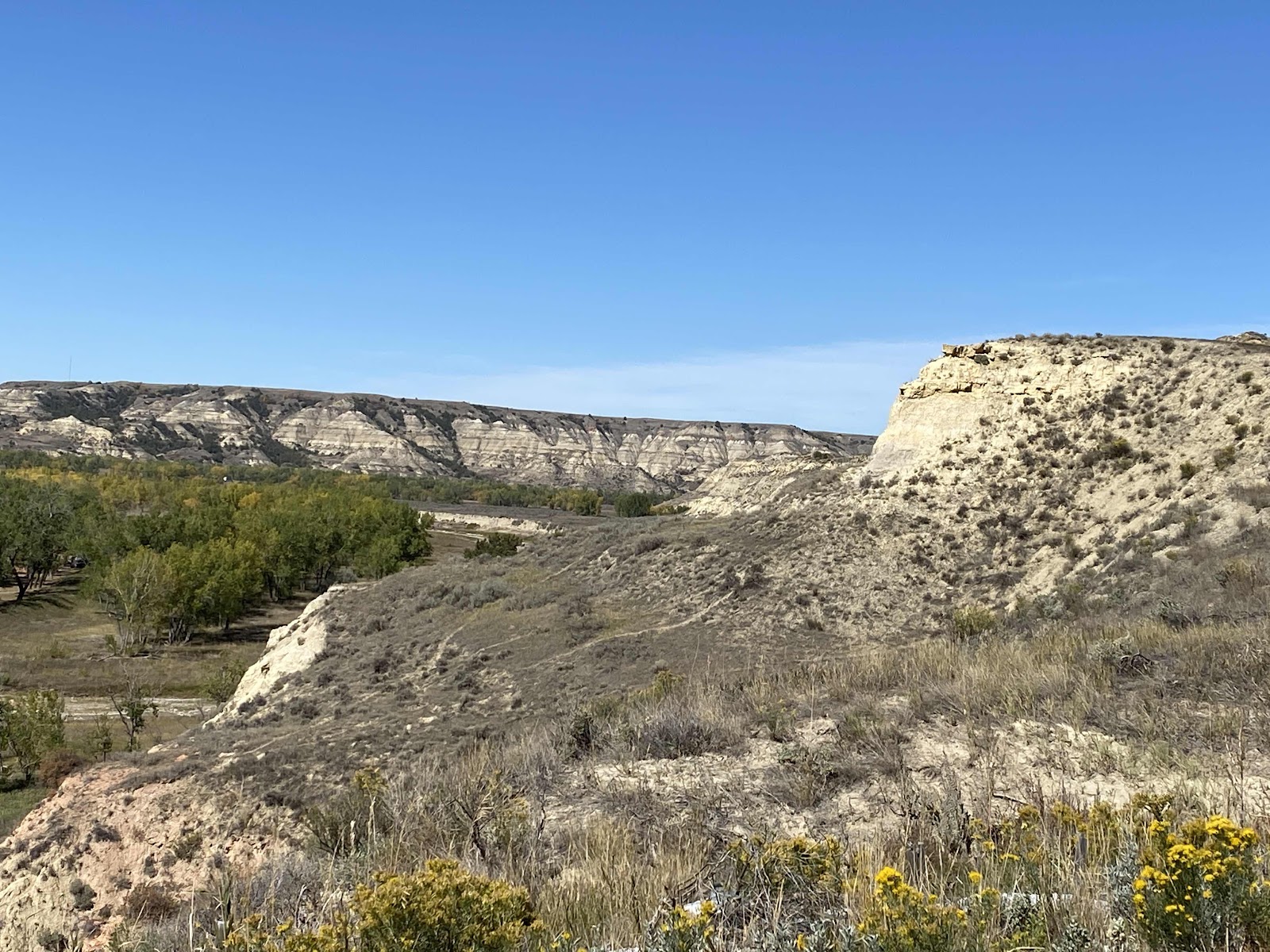
Heading west from Bismarck we stopped at Theodore Roosevelt National Park. Teddy first came to North Dakota Territory in 1883 to hunt bison. A year later he returned while mourning the deaths of his first wife and mother who died on the same day. He wanted to lose himself in the vastness. He became a cattle rancher and found adventure. He retuned many times. Roosevelt credited his experiences as the basis for his preservation efforts. As president 1901-1909, he created 18 national monuments, 5 national parks, and 150 national forests—over 230 million acres of protected land.
His park was created in 1947. It is situated in the rugged badlands of western ND. 


His cabin. 


And a wooden statue. 


Next up, Montana and Little Bighorn. 


Bismarck

Originally called Missouri Crossing because it’s where Louis and Clark crossed the river, it was renamed Edwinton by the Northern Pacific railway in honor of their chief engineer. It was finally renamed Bismarck after the German chancellor Otto von Bismarck in hopes of attracting German immigrants to the area. It is the only U.S, capitol named for a foreign statesman. 
Louis and Clark spent the winter of 1804-05 just north of Bismarck among the friendly Mandan Indian tribe. 

The Fort Abraham Lincoln state park in Mandan (on the west side of the river) has recreated the earth lodges that had once stood there in what was called On-a-Slant Village. 

The park also holds the remnants of the 7th Cavalry Post of which George Armstrong Custer was commanding officer from 1873 to 1876. Obviously, his command ended with the Battle of the Little Big Horn. The site of the battle is on our route to Colorado, so more to come on that. 


The Custer house has been reconstructed. Rick stands where Custer might have stood overlooking the parade ground. 


Wednesday, September 22, 2021

On the Road Again

It is so good to be blogging again. We are on a road trip to Colorado. We will meet up with Erich and Ashlee in Aspen for some hiking and good dining. Heading north from Milwaukee, we spent a day in Northfield, MN, reacquainting ourselves with Carleton College. Yipes, it’s been 13 years since Erich graduated! 
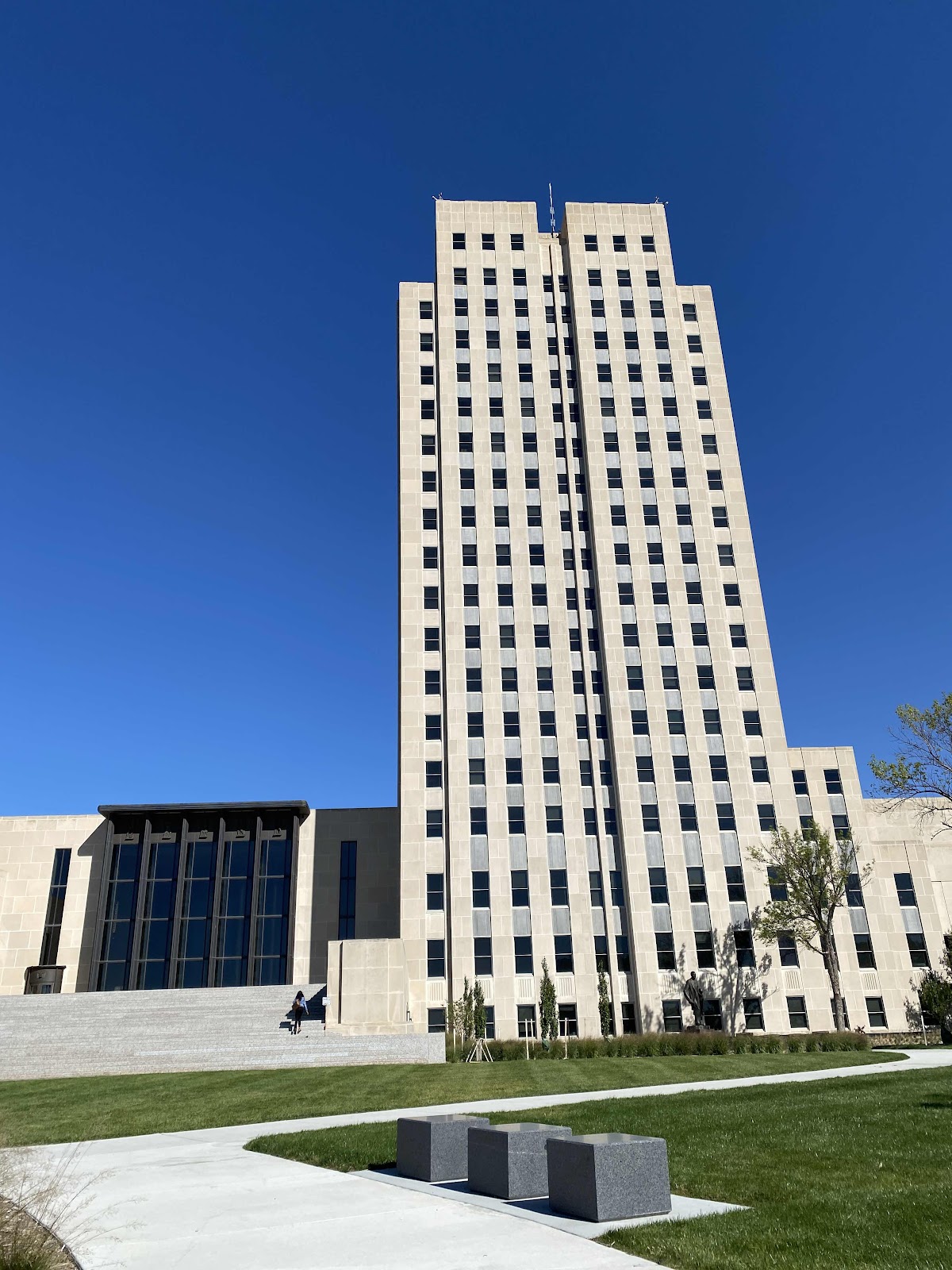
Then on to North Dakota, thru Fargo to Bismarck, it’s capitol. The building itself is uninspiring, Art Deco built in the 1930s to replace the original which burned down. At 21 stories, it is the tallest building in ND. 


We are back on the trail of Lewis and Clark, and there is a nice statue of Sakakawea at the capital as well as a sculpture of a bison made completely out of rebar. 


More to come on Bismarck. Stay tuned. 

Tuesday, October 6, 2020

We’re Not in Kansas Anymore

But we were last night—in Topeka to be exact, which, by the way, is the capitol of Kansas. I sure didn’t remember that. The capital building is lovely. The dome is taller than the U.S capitol. It is copper but has been treated with chemicals to give it a patina. You can climb to the top, 295 steps. We didn’t!


Then on to the Great Overland Station, one of the Union Pacific Railroad Passenger Depots, now a museum. It was built in 1925.


There is another surprising historic site in Topeka that commemorates the landmark decision of the Supreme Court in the case Brown v Board of Education aimed at ending racial segregation in public schools. The site is in the Monroe school. The NAACP recruited 13 African American parents to file the suit contesting the state law that allowed cities to segregate students. 


And, lastly, a visit to the Evel Knieval museum, housed in a giant, historic Harley Davidson dealership. The daredevil performed from 1965 to 1980. He made 168 jumps and crashed 19 times. Does everyone remember when he attempted to rocket across the Grand Canyon? They itemize the number of broken bones (left femur 5 times, back 4 times, every rib at least once, as examples).  He actually died in 2007 of natural causes. 


Road trips are such fun and a treat during this pandemic. 

Friday, February 28, 2020

Arizona Adventure

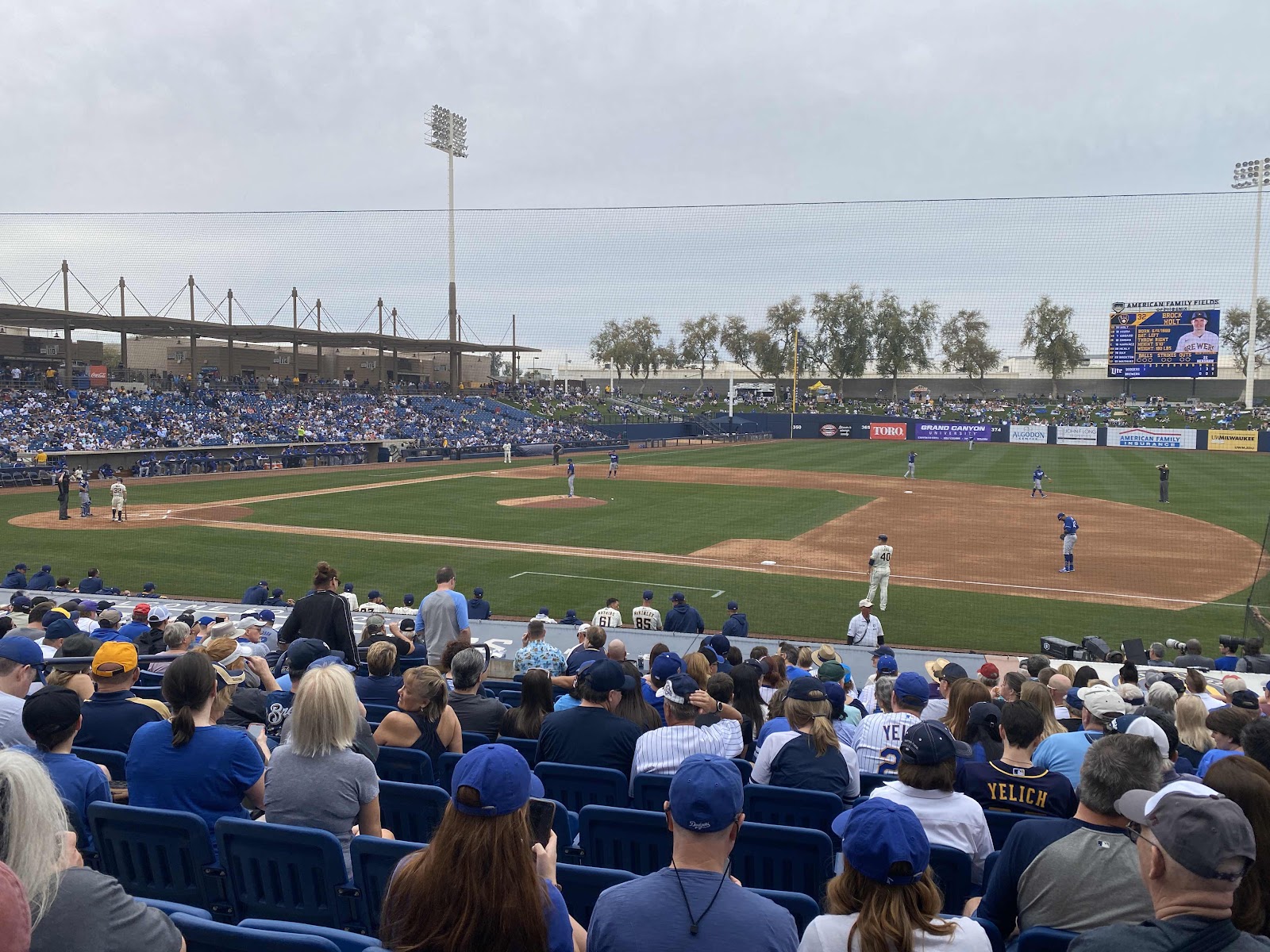
I have been lax in reporting on our Arizona odyssey. So here it goes. We are just finishing our week in Scottsdale. The weather has been lovely (70s and sunny).  We went to a Brewers spring training game today against the Dodgers and the Brewers won.  Yay.  The American Family Fields is quite a complex. 


Prior to Scottsdale, we had a terrific 12 days in Sedona with the Bruce’s. We hiked nine of those days in beautiful red rock country. We tried some new trails and revisited some of our favorites. Pete’s two new knees got quite a workout. He’s legs are so straight we hardly recognized him!  Lots of good laughs with the Dunn’s and Baldauf’s. 


Now it’s on to New Mexico, then Texas. We will be stopping in wine country around Fredericksburg before heading to Houston where we’ll stay with friends. Then finally another stop at Erich’s before heading home. We should be in Milwaukee by March 10th if we don’t run into weather issues.